
by Donna Peberdy, Solent University Southampton, UK
What role do film and television have in how we understand and make sense of sexual violence? How do film and television contribute to or challenge prevailing myths around sexual violence? What does it mean to screen sexual violence?
These are some of the questions I am exploring this year as part of Screening Sexual Violence, a 12-month British Academy-funded public engagement project. In an obvious sense, the ‘screen’ here is the cinema screen, the television screen, the computer screen, or the mobile device screen – the screen in which stories of sexual violence are watched and viewed. This is the start but not the endpoint. ‘Screening’ Sexual Violence is inspired, like the Screening Sex project more broadly, by the dual meaning of the verb ‘to screen’, as discussed by brilliant film scholar Linda Williams. To screen, Williams tells us, is as much about revelation as it is concealment. That is, what we see on screen is as important as what we don’t see. This dual meaning is critical when considering media representations of sexual violence. What are the common tropes or themes when it comes to representing sexual violence? What techniques and language are used by filmmakers, writers, or actors? What is focused on, highlighted or repeated? What is ignored, hidden or obscured? What themes and approaches do we see less of, or not at all?
Read more: Why Screening Sexual Violence?This week, I had the opportunity to attend an event that sums up for me why screening sexual violence matters. I was invited to a parliamentary screening at the House of Commons of My Blonde GF, an 18-minute documentary about one woman’s experience of image-based online abuse. British poet and novelist Helen Mort found out, through a friend, that they had seen her on a porn site. It was news to Mort; she had never shared any explicit images or videos of herself. Mort watches back one of the videos for the documentary: ‘There’s a woman. She’s sitting on the edge of the bed. She’s got my face. She’s giving a blow job. It’s my face, kind of. It’s my nose, it’s my eye, it’s my fringe. It looks like my jawline, but it’s not my mouth. The person’s skin – the woman’s skin – is a lot more tanned than mine would be. And this woman has exactly my tattoo’. Mort was the victim of deepfakes – the use of AI or machine learning technology to create realistic images or videos that never happened – in Mort’s case multiple deepfakes featuring her image in hardcore porn, often in violent scenarios. For Mort – and as the documentary tells us is the case with 96% of deepfakes – the pornographic use of images was non-consensual. Mort was able to work out that multiple photos of her between the ages of 19 and 32 had been used, including pregnancy and prom photos, forever recontextualising those memories as abuse. She hadn’t had an active Facebook account since 2015.
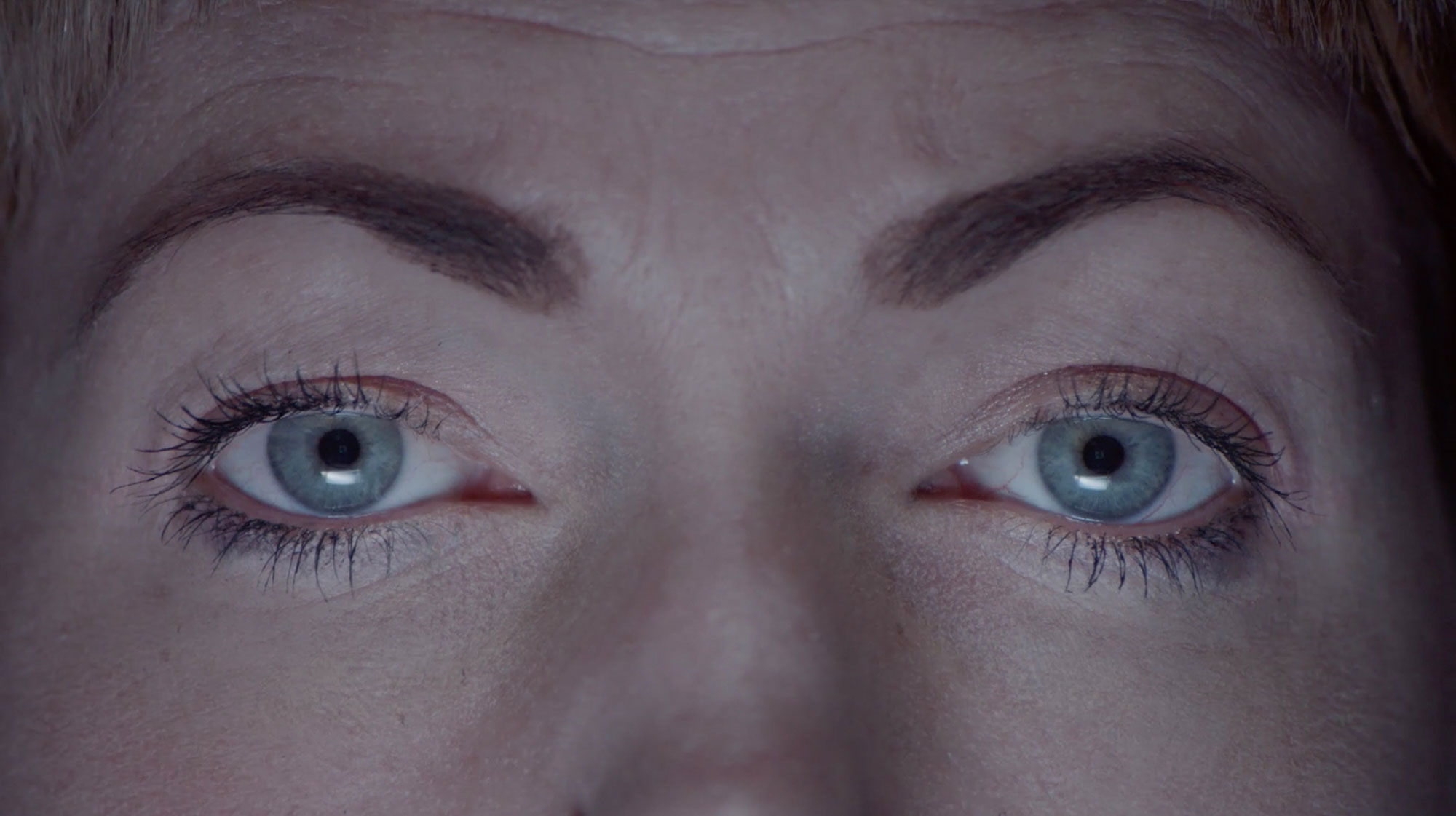
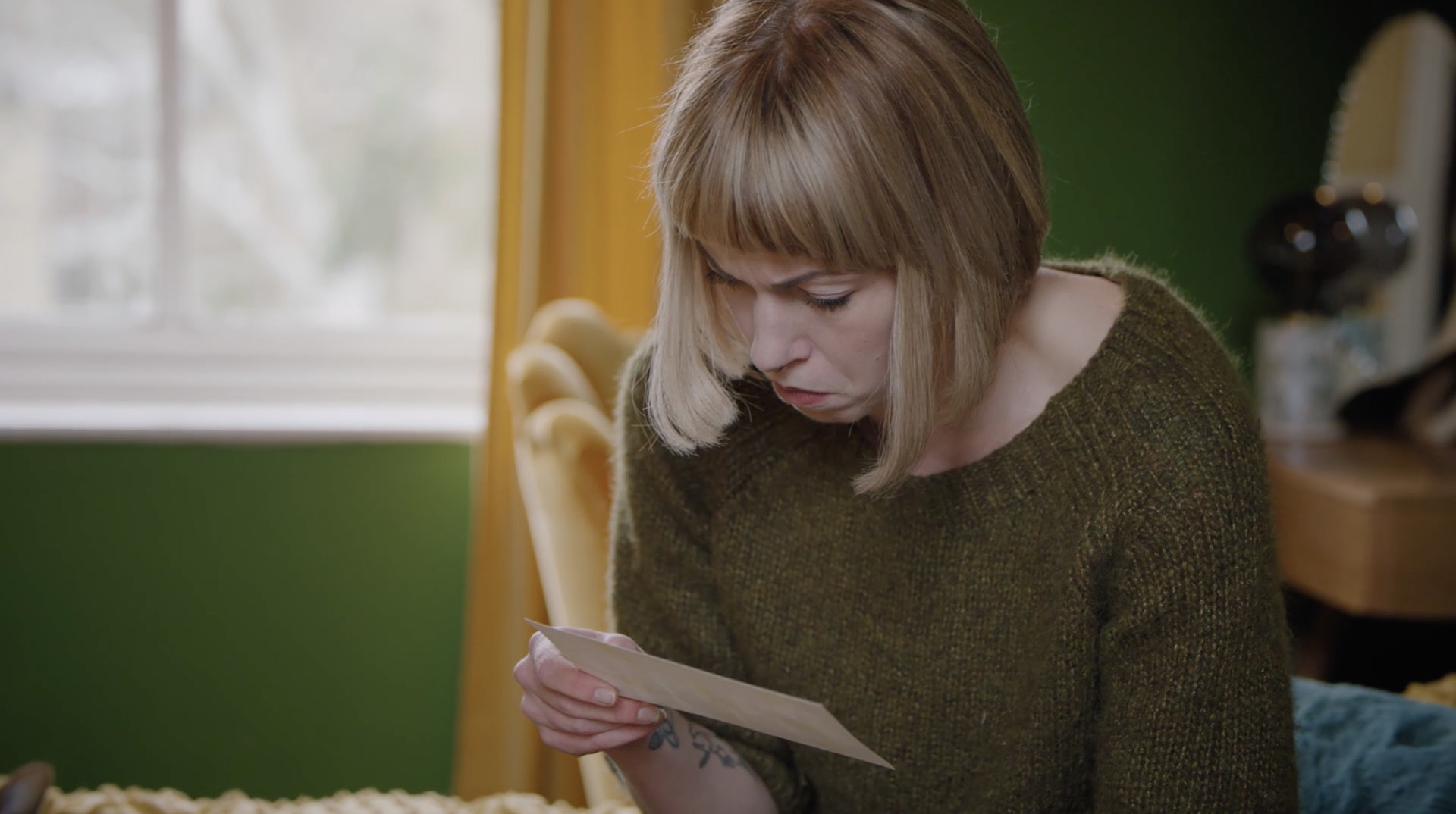
It was the fourth time I was watching My Blonde GF, having watched the film as a part of the pre-selection committee for short film initiative 16 Days 16 Films (it would go on to become a finalist in 2023 and screened online as part of the 16 Days programme). Watching the film again in Committee Room 10 at the House of Commons changed the film again. Impressively imposing, with intricately carved doors, high panelled ceiling and crimson flock damask wallpaper, it was a room clearly not designed for a film screening. The green leather chairs in the 70-capacity room face into the centre of the room, side-on to the screen, which was dwarfed by a huge nineteenth century oil painting of King Alfred and the Saxons battling the Danes. The point, however, is less about the suitability of the space than the significance of the location. In a room where bills are debated, in the symbolic centre of political power in the UK, to an invited audience that included MPs, the intention is to raise awareness about the impact of deepfakes and the need for legislative change. Mort tells us how the police could do nothing since the videos weren’t classed as either malicious communications (they were discovered through a third party) or revenge porn (they weren’t real images). This clearly abusive and exploitative action was yet to be recognised as a crime in legal terms.
A too-short yet fascinating panel discussion followed the screening, chaired by Lindsay Poulton (Head of Documentaries at The Guardian) and featuring Mort, director Rosie Morris, producer Rebecca Mark-Lawson of Tyke Films, and Alessia Bianco, Head of Everyone’s Business (a Hestia programme providing domestic abuse and sexual violence support for employers). The panel spoke about how the Online Safety Bill was going through when the film was being made and, with the Act since being passed, it now means it is illegal to distribute such images but not make them. The responsibility, the panel emphasised, must be shifted away from individuals and victim-survivors towards the law, to holding account the platforms distributing and profiting from deepfakes and, crucially, to a culture shift that emphasises education and prevention. Responding to the panel, one of the small number of MPs in attendance – Shadow Minister for Domestic Violence and Safeguarding Alex Davies-Jones – spoke passionately about the conversations that are being had by some MPs but also of the challenge of pushing it high on the agenda and keeping it there. High profile deepfake cases such as the recent Taylor Swift story certainly elevate the issue but how is that focus and energy sustained? My Blonde GF powerfully demonstrates that this is not just an issue facing celebrities whose images are readily and publicly accessible. Giving space to the voices and experiences of people like Helen Mort enhance the debate and place it firmly in the everyday. This is not about how sophisticated or seamless the technology is, Mort emphasised; even the poor quality fakes were psychologically damaging. It is the intention behind the abuse that is most harmful.

The parliamentary backdrop was a multi-sensory reminder that screening sexual violence is also about the spaces in which representations of sexual violence are watched and how they come to be seen. Who might benefit from watching such films and having the opportunity to discuss them? Ultimately, how successful a film can be in inciting change is caught up with how successful a film can be in reaching an audience and short film has its specific challenges when it comes to distribution. 16 Days 16 Films, providing an annual platform for short films addressing gender-based violence since 2018, have seen some of their finalist filmmakers go on to make award-winning features and secure prominent distribution; Molly Manning Walker is a recent exemplar with her stunning coming-of-age consent drama How to Have Sex that won the Un Certain Regard at Cannes Film Festival and is now streaming on Mubi. There have been eighty 16 Days 16 Films short film finalists to date, all seeking to ‘explore, emote or educate on a form of violence against women’ – many of these films are no longer available to watch. Part of my research project this year involves cataloguing and analysing these films, bringing the films and themes to new audiences, such as children and young people, speaking with the filmmakers and working with 16 Days 16 Films on a resource to help filmmakers tell their impactful stories. In the meantime, My Blonde GF was picked up by The Guardian as part of its documentaries strand and is available to watch for free online. When you’ve watched it, please share it and talk about it and help Helen’s story and Rosie Morris’s powerful documentary raise awareness about the impact of this very real type of sexual violence.
Author Bio
Donna Peberdy is Associate Professor of Performance, Sex and Gender at Solent University Southampton, UK. Donna is a recipient of a British Academy Mid-Career Fellowship to pursue her research project ‘Screening Sexual Violence: Silence Breaking and Performance Activism Post #MeToo’ in 2024. The 12-month fellowship involves comprehensive analysis of current ways sexual violence is depicted on screen, assessing the role of film and television shaping public understanding. For more information about Screening Sexual Violence or to get in touch, visit the research project website.
Watch My Blonde GF via Guardian documentaries.

 Screening Sex